

By Jacob Scott
Boise’s climate is distinctive — hot, dry summers; cold winters with snowfall; and brief transitions in spring and fall. While those basic contours haven’t changed, local weather data and environmental studies reveal deeper shifts that are steadily affecting how we live, plan, and care for our surroundings.
Climate Trends Boise Residents Should Know
Data shows Boise is warming notably. The average summer temperature has risen several degrees since the 1970s, and the number of extremely hot days (over 100°F) is climbing. The rise in summer heat brings new risks of heat stress, especially for vulnerable populations. Meanwhile, Boise’s winters are less reliably cold, though occasional freezes do occur.
At the same time, precipitation patterns are changing. More winter storms, heavier rainfall nights, and shifts in snowpack timing in Boise’s watershed are altering how water flows into the Boise River and associated reservoirs. The result: water supply is becoming more variable, with lower summer streamflows and pressure on irrigation needs.
Key Environmental Impacts
Urban Heat Islands and Public Health
Dense development, asphalt, and limited tree cover mean built areas in Boise often become significantly hotter than surrounding green spaces. These “urban heat islands” worsen during heatwaves, increasing both energy use and health risks.
Wildfire Smoke and Air Quality
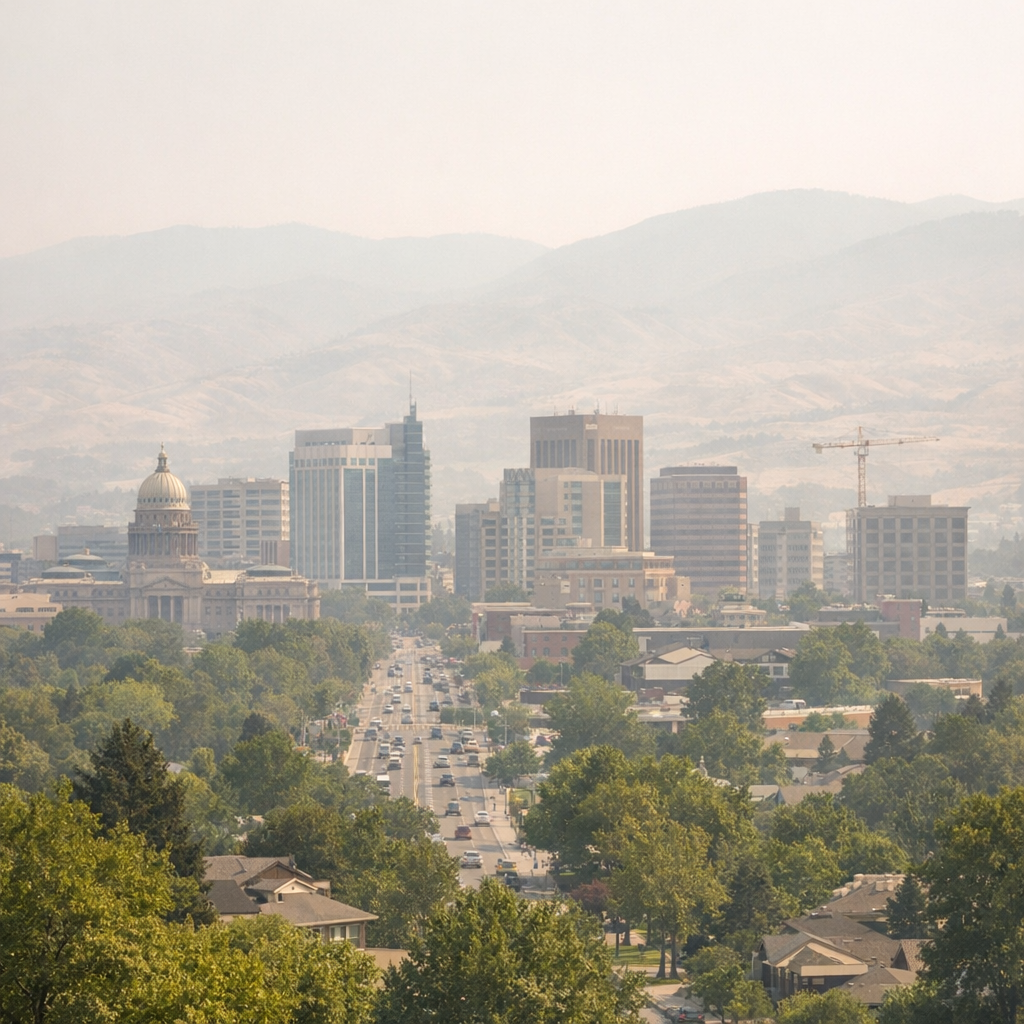
Hotter, drier summers extend wildfire seasons, even at higher altitudes. Smoke from regional fires or nearby forest burns can linger over Boise, particularly when atmospheric conditions trap pollutants close to the ground, degrading air quality for days.
Water Stress and Ecosystems
Earlier snowmelt in upstream mountains, combined with warmer summers, is reducing river flows when they’re most needed. Streams, aquatic species and recreational water use all feel the effect. At the same time, drought frequency is increasing, stressing forests, agriculture and lawns alike.
How Boise is Responding — And What You Can Do
The city has launched a Climate Adaptation Assessment and a Climate Action Roadmap. Key strategies include expanding the urban tree canopy, managing open space, protecting native habitats, reducing greenhouse gas emissions, and planning infrastructure to handle more extreme weather.
As individuals, there are actions you can take today:
- Plant shade trees around your home to combat heat and save on cooling costs.
- Mind your outdoor time during hot or smoky days—check forecasts and air quality reports.
- Conserve water—especially in summer months—to help aquifers and streams.
- Support native plant landscaping, which needs less irrigation and rehabs soil health.
- Stay informed & involved—engagement in planning committees or local conservation groups helps ensure decisions reflect community priorities.
Bottom Line
Boise’s weather feels familiar in shape, but the edges are shifting. More extreme heat, unpredictable water flows, and air quality threats are quiet but growing changes. By understanding these trends and acting locally, we can help the Treasure Valley stay resilient, comfortable, and livable for years to come.